|
#462: iHub für Start-ups: Drei Grazer Unis bündeln ihre Kräfte / iHub for start-ups: Three universities in Graz join forces
Montag, 20. Juli 2026
|
|
|
uni.news - der Newsletter für Mitarbeiter:innen
|
|
|
iHub: Neuer Schub für Grazer Spitzen-Spin-offs
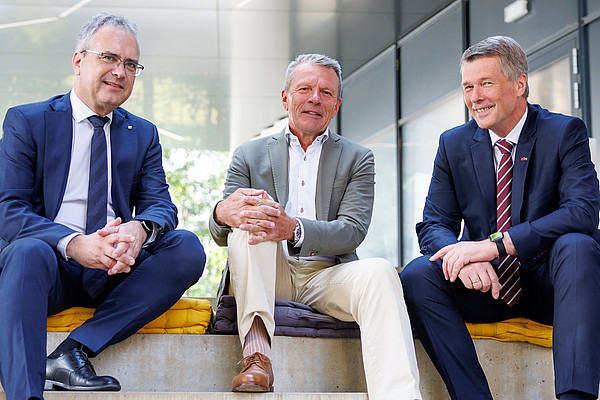
Uni Graz, TU Graz und Med Uni Graz bündeln im neuen iHub Graz ab sofort ihre Kräfte im Hinblick auf Start-up-Unterstützung: Die gemeinsame Plattform soll vielversprechende akademische Ausgründungen auf Investitionen vorbereiten und die Finanzierungslücke bis zum Einstieg von Venture-Capital-Geber:innen schließen. Dafür werden rund sechs Millionen Euro über sieben Jahre investiert. Der iHub bietet Mentoring, professionelles IP-Management sowie Zugang zu Kapital und internationalen Investor:innen-Netzwerken. Ergänzend stellen das Land Steiermark und die Raiffeisen-Landesbank Steiermark zehn Millionen Euro für wachstumsorientierte Start-ups bereit. Mit der neuen Drehscheibe sollen Forschungsergebnisse schneller in den Markt gelangen, neue Arbeitsplätze entstehen und die Steiermark als Standort für DeepTech und Life Sciences gestärkt werden. >> mehr erfahren
The University of Graz, Graz University of Technology and the Medical University of Graz are joining forces in the new iHub Graz. The joint platform is designed to prepare promising academic spin-offs for investment and bridge the funding gap until venture capitalists come on board. Around six million euros will be invested over seven years for this purpose. The iHub offers mentoring, professional IP management and access to capital and international investor networks. In addition, the Province of Styria and Raiffeisen-Landesbank Steiermark are providing ten million euros for growth-oriented start-ups. The new platform is intended to bring research findings to market more quickly, create new jobs and strengthen Styria’s position as a hub for deep tech and life sciences. >> learn more
|
|
|
Uni Graz im Zeichen der mathematischen Biologie
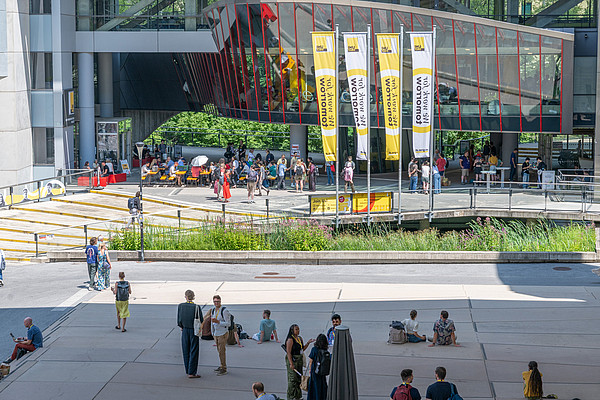
Internationaler Flair, lebendiger Austausch und mehr als 1.000 Gäste prägten von 13. bis 17. Juli 2026 das Campusleben der Universität Graz: Beim Kongress ECMTB 2026 kamen Forschende aus aller Welt zusammen, um aktuelle Entwicklungen der mathematischen und theoretischen Biologie zu diskutieren. Veranstaltet wurde das wissenschaftliche Großereignis vom Organisationsteam rund um Mathematiker und NAWI-Dekan Klemens Fellner. Im Mittelpunkt stand die Frage, wie Mathematik komplexe biologische Prozesse verständlich und berechenbar macht – von Zellbewegung und Embryonalentwicklung über Infektionsdynamiken bis zu datengetriebenen Methoden in Medizin und Lebenswissenschaften.
Der Kongress sorgte damit nicht nur für intensive wissenschaftliche Begegnungen, sondern stärkte auch die internationale Sichtbarkeit der Universität Graz als Ort interdisziplinärer Spitzenforschung.
An international atmosphere, lively discussions and more than 1,000 guests characterised campus life at the University of Graz from 13 to 17 July 2026: the ECMTB 2026 conference brought together researchers from all over the world to discuss the latest developments in mathematical and theoretical biology. This major scientific event was organised by a team led by mathematician and Dean of the Faculty of Natural Sciences Klemens Fellner. The focus was on how mathematics makes complex biological processes understandable and quantifiable – from cell movement and embryonic development through infection dynamics to data-driven methods in medicine and the life sciences.
The congress thus not only facilitated in-depth scientific exchanges but also strengthened the international profile of the University of Graz as a centre for cutting-edge interdisciplinary research.
|
|
|
Sermilik-Station im Fokus: Arktis-Tag auf Ö1
In den vergangenen drei Jahren hat die Universität Graz schrittweise ihre Polarforschungsstation im Sermilik-Fjord in Ostgrönland in Betrieb genommen. Aktuell ist eine Forschungsgruppe der Universität Graz zusammen mit Studierenden vor Ort. Begleitet werden Sie dabei vom ORF-Journalist Paul Sihorsch. In der Woche zwischen 20. und 26. Juli 2026 erscheinen im ORF mehrere Beiträge zur Forschung in der Arktis. Der 23. Juli wird auf Ö1 komplett der Arktis gewidmet. Einen Überblick finden Sie hier.
Over the past three years, the University of Graz has gradually put its polar research station in Sermilik Fjord, East Greenland, into operation. A research team from the University of Graz is currently on site, along with students. ORF journalist Paul Sihorsch is accompanying them. During the week of 20–26 July, the ORF will broadcast several programmes on Arctic research. 23 July will be entirely dedicated to the Arctic on Ö1. You can find an overview here.
|
|
|
Lehrlinge feiern erfolgreichen Jahresabschluss
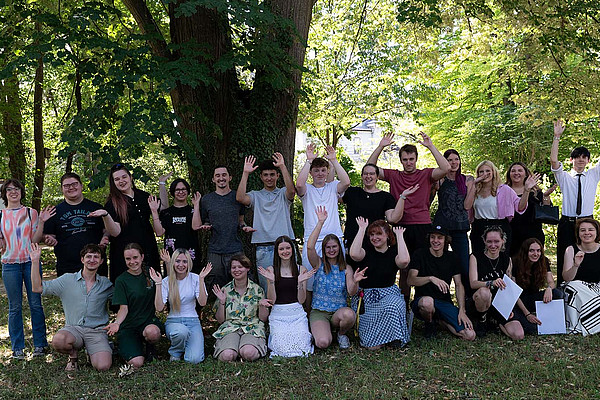
Sie bringen Strom in die richtigen Bahnen, Netzwerke zum Laufen und Metall in Form. Sie pflegen Pflanzen bis zur Blütenpracht, behalten Termine, Zahlen und Anträge im Blick, verwalten analoge und digitale Wissensbestände und untersuchen im Labor mit Pipette und Präzision selbst kleinste Proben: Am 14. Juli 2026 feierten 27 Lehrlinge der Universität Graz den erfolgreichen Abschluss ihres aktuellen Lehrjahres. Fünf weitere Lehrlinge beendeten ihre Ausbildung in diesem Semester vollständig – für sie beginnt nun der Einstieg ins Berufsleben. >> mehr erfahren
They ensure electricity flows where it’s needed, keep networks running and shape metal. They tend to plants until they are in full bloom, keep track of deadlines, figures and applications, manage analogue and digital knowledge bases, and examine even the tiniest samples in the laboratory with pipettes and precision: on 14 July 2026, 27 apprentices at the University of Graz celebrated the successful completion of their current year of apprenticeship. A further five apprentices completed their training this semester – for them, the transition into working life now begins. >> learn more (German only)
|
|
|
Starke Fördererfolge für die Universität Graz
Gleich mehrere Projekte der Universität Graz konnten in den letzten Wocchen bedeutende Förderungen einwerben: Der Chemiker David Clases erhält 150.000 Euro aus einem ERC-Proof-of-Concept-Grant für das Projekt NanoArchive, der ÖNB-Jubiläumsfonds unterstützt ein Forschungsvorhaben von Richard Sturn zur wirtschaftspolitischen Bedeutung Ludwig von Mises’, und die Europäische Kommission fördert mit insgesamt 7,2 Millionen Euro die nächste Phase der Hochschulallianz Arqus. Zusätzlich schafft das mit knapp zwei Millionen Euro dotierte Projekt “EAS-EL” eine europäische KI-Sandbox für Innovation und Entrepreneurship. Die “Friedrich-Flick-Stiftung” finanziert außerdem mit 300.000 Euro eine neue Stiftungsprofessur für Praxisforschung und Transfer im Elementarbereich. Beginn der Professur ist der 1. Oktober 2026.
Several projects at the University of Graz have secured significant funding in recent weeks: Chemist David Clases has been awarded 150,000 euros from an ERC Proof-of-Concept Grant for the NanoArchive project; the ÖNB Anniversary Fund is supporting a research project by Richard Sturn on the economic significance of Ludwig von Mises; and the European Commission is providing a total of 7.2 million euros to fund the next phase of the Arqus University Alliance. In addition, the “EAS-EL” project, with funding of just under two million euros, is creating a European AI sandbox for innovation and entrepreneurship. The “Friedrich Flick Foundation” is also providing 300,000 euros to fund a new endowed professorship for applied research and knowledge transfer in early childhood education. The professorship will commence on 1 October 2026.
|
|
Universität Graz
Universitätsplatz 3
8010 Graz
|

|
|
|
|
|